how-to
HOA Rule Enforcement Best Practices That Hold Up

Last Updated: November 2, 2026
Quick Summary
Effective HOA rule enforcement starts with specific, provable rules tied to the governing documents, then follows due process: document the violation, send written notice with a cure period, offer a hearing, issue written findings, and only then apply the penalty. Consistent enforcement backed by a violation log protects the board from selective-enforcement claims.
- Vague rules are the single biggest source of enforcement disputes, so set measurable standards.
- Confirm your state's requirements and follow the stricter of state law or the governing documents.
- A board that fines before the hearing is complete can lose the entire action on procedural grounds.
- A violation log records each step and is the board's proof against selective-enforcement claims.
- People comply when they understand the rule, see it applied fairly, and feel heard.
Table of Contents
- Start With Rules You Can Actually Enforce
- Due Process in HOA Enforcement: Notice, Hearing, Written Findings
- HOA Violation Notice Templates That Survive a Challenge
- HOA Fine Schedule Best Practices and Fines and Penalties Limits
- Selective Enforcement HOA Liability and Consistent Enforcement
- Conflict Resolution, Mediation, and the Psychology of Compliance
- Working With a Management Partner on Enforcement
- Frequently Asked Questions
Start With Rules You Can Actually Enforce
Most boards lose HOA rule enforcement fights before they ever send a notice. The rule itself is the problem.
HOA rule enforcement best practices start with one hard truth: a rule you cannot prove, explain, or apply evenly is a rule you cannot enforce. Boards often inherit covenants, conditions, and restrictions (CC&Rs) written decades ago that no one can interpret the same way twice. That is where enforcement breaks down.
So before you chase a single violation, build the foundation:
- A rule must be specific enough that two people reading it reach the same conclusion
- A rule must tie back to the governing documents or a properly adopted policy
- A rule must serve a real community purpose, not a board member's personal preference
Get those three right and enforcement becomes routine. Get them wrong and every notice risks turning into a dispute.
Drafting Clear and Unambiguous Rules
Vague rules are the single biggest source of enforcement disputes. "Keep your yard neat" sounds reasonable until a homeowner argues their yard is neat. "Landscaping must be trimmed below 12 inches and no inoperable vehicles may be visible from the street" leaves nothing to argue about.
When drafting or revising rules, follow this checklist:
- Name the specific condition, not a general impression
- Set a measurable standard where possible (height, distance, time)
- State what is prohibited and what is allowed
- Avoid words like "excessive," "reasonable," or "appropriate" without a definition
- Confirm the rule matches the governing documents
- Have legal counsel review before adoption
A good test: hand the rule to a homeowner who wants to comply. If they cannot tell exactly what to do, rewrite it.
Reasonableness of Rules and Governing Documents
Courts and arbitrators generally ask whether a rule is reasonable and whether the board applied it in good faith. A rule that is arbitrary, overly broad, or unrelated to a legitimate community interest invites a challenge.
Boards also need to know the hierarchy. Governing documents include the declaration, bylaws, and articles of incorporation. Rules and regulations sit below those and must not conflict with them.
Watch out: adopting a rule by board vote alone when the governing documents require a membership vote creates a rule that cannot survive a challenge. Check the amendment process before you act.
Due Process in HOA Enforcement: Notice, Hearing, Written Findings
Due process in HOA enforcement means giving a homeowner clear notice of the alleged violation, a real chance to be heard, and a written decision that explains the outcome. Skip any of those steps and the enforcement action is exposed, not just to a reversal, but to a claim that the board acted arbitrarily or in bad faith.
State law and the governing documents set the specific requirements, and they do not always agree. Many states require a written notice, a reasonable cure period, and an opportunity for a hearing before fines begin. Some require the hearing before any fine is assessed; others allow fines to accrue during an appeal.
The sequence that holds up:
- Document the violation with dated photos and a written record
- Send written notice describing the violation, the rule cited, and the cure period
- Offer a hearing if the homeowner requests one
- Hold the hearing and let the homeowner respond
- Issue written findings stating the decision and the basis for it
- Apply the penalty only after the process is complete
Written Notice Requirements and Hearing Process
A violation notice is a formal written communication that identifies the rule broken, the evidence, the corrective action required, and the deadline.
The hearing does not need to be elaborate. It needs to be fair.
Boards that treat the hearing as a formality sometimes find a homeowner appeals. The hearing is the record.
Written findings matter more than most boards realize. They show the decision was reasoned, not personal.
The enforcement sequence that holds up follows six steps in order.
| Step | What to do |
|---|---|
| 1 | Document the violation with dated photos and a written record |
| 2 | Send written notice describing the violation, rule cited, and cure period |
| 3 | Offer a hearing if the homeowner requests one |
| 4 | Hold the hearing and let the homeowner respond |
| 5 | Issue written findings stating the decision and its basis |
| 6 | Apply the penalty only after the process is complete |
HOA Violation Notice Templates That Survive a Challenge
A strong violation notice template removes emotion and guesswork. It forces the board to state facts, cite the rule, and document the cure period. Here is a structure you can adapt:
Notice of Violation Date: [date] To: [homeowner name and address] Rule cited: [exact section of governing documents or rules] Description of violation: [specific, factual description] Evidence: [dated photos, inspection report, complaint record] Required corrective action: [specific action] Cure deadline: [date] Hearing rights: You may request a hearing by [date] in writing to [contact]. Board contact: [name, email, phone]
Keep the language neutral. Avoid accusatory phrasing. Say "the lawn exceeds the 12-inch height standard" instead of "you have let your yard become a mess." The template protects both the homeowner and the board.
Send notices by the method the governing documents or state law requires, and keep proof of delivery.
HOA Fine Schedule Best Practices and Fines and Penalties Limits
An HOA fine schedule is a written policy that sets out penalties for specific violations, the amounts, and how they escalate. A clear schedule supports consistent enforcement and reduces claims of favoritism.
Good fine schedule practices:
- Publish the schedule so every homeowner knows the penalties in advance
- Tie each fine to a specific rule
- Set a cure period before fines begin
- Escalate gradually rather than hitting a homeowner with a large penalty at once
- Confirm the schedule complies with state law and the governing documents
Many states cap fine amounts and require a hearing before a fine is imposed. Some limit how fines can be collected. Boards must check their own state's rules, because a fine that exceeds the legal limit is unenforceable and can expose the association to liability.
Fines are a tool for compliance, not a revenue source. When a board treats them as income, homeowners notice, and community trust erodes.
Selective Enforcement HOA Liability and Consistent Enforcement
Selective enforcement HOA liability is real: when a board enforces a rule against one homeowner but ignores the same violation elsewhere, it opens itself to claims of discrimination, breach of fiduciary duty, and arbitrary enforcement.
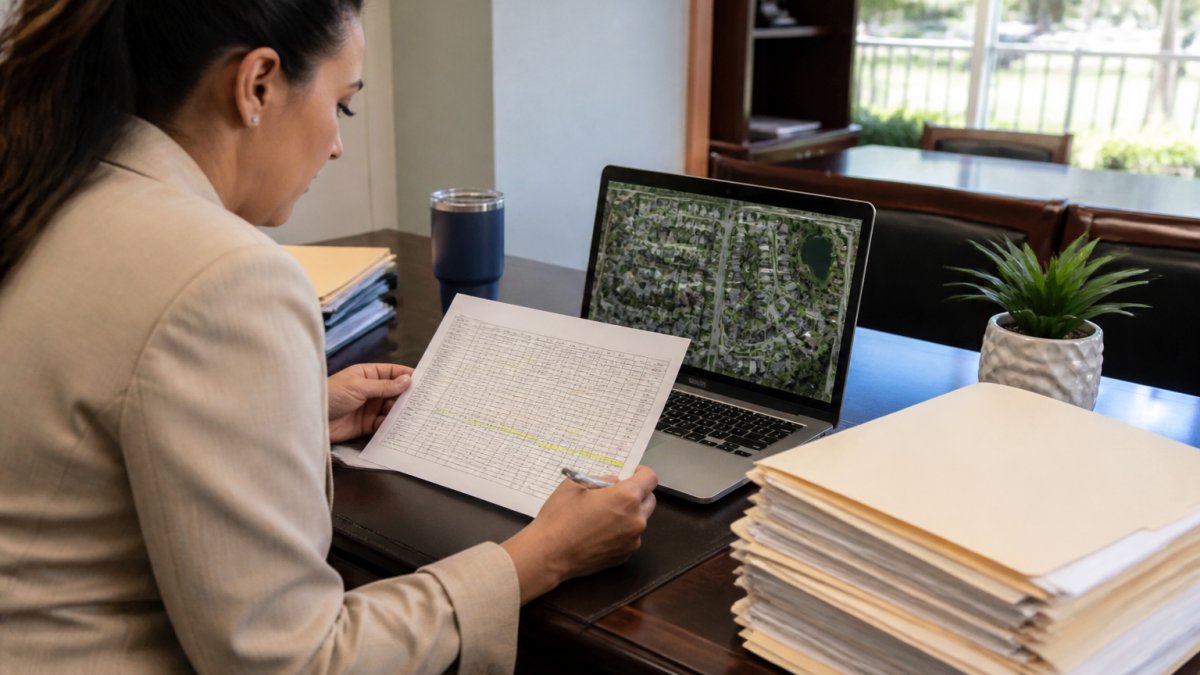
The fix is a written enforcement policy that applies to everyone the same way. That policy should state:
- How violations are identified and logged
- Who reviews and approves enforcement action
- The standard cure periods
- How fines escalate
- How the board handles repeat violations
But a policy on paper does not prove consistency. The proof is the log. Most top-ranking guides stop at "keep good records" and never explain what a defensible record actually looks like, which is where boards get caught.
Documenting Evidence and Tracking Violations
Documenting evidence turns a complaint into a defensible record. Every violation file should include dated photos, the inspection or complaint record, copies of notices, hearing notes, and the final decision.
Digital tools make this far easier than the old paper log, and this is where most published guidance is silent.
A common mistake is relying on memory or informal complaints. If it is not written down and dated, it did not happen.
Watch out: a board that adopts a policy but keeps no violation log has the appearance of consistency without the proof, and appearance alone will not survive a challenge.
Conflict Resolution, Mediation, and the Psychology of Compliance
Most enforcement disputes are not really about the rule. They are about how the homeowner feels treated. Understanding the psychology of compliance changes how boards approach enforcement.
People comply when three things are true:
- They understand the rule
- They believe it applies fairly to everyone
- They feel their side was heard
Mediation gives homeowners a structured way to resolve disputes before they escalate. Many associations build mediation into the enforcement policy as an option after a notice but before a formal hearing. It costs less than a legal fight and often preserves the relationship.
Conflict resolution strategies that work:
- Listen first, then explain the rule
- Separate the person from the problem
- Offer a clear path to compliance
- Document the conversation
For more practical board guidance, our community management blog covers day-to-day governance topics.
Working With a Management Partner on Enforcement
A management partner brings consistency that volunteer boards struggle to maintain. Boards rotate, memories fade, and enforcement drifts. A professional manager keeps the process steady.
A management partner can support boards with documented enforcement workflows, violation tracking, and notice handling.
If you are weighing whether to outsource enforcement, our guide to property management for small HOAs explains costs and which tasks to hand off. See how to choose virtual CAM services. Ready to move? Request HOA management services through a board-tested proposal process, or visit Harshman Community Management to start the conversation.
Watch out: handing enforcement to a manager without a written enforcement policy just moves the inconsistency. Set the policy first, then delegate the process.
Consistent rule enforcement is one of the hardest jobs a board faces, and one of the most important for protecting property values and community harmony.
Frequently Asked Questions
What are the legal requirements for HOA rule enforcement?
Enforcement has to follow the association's own governing documents and state law. In practice that means a rule that exists in the covenants, conditions and restrictions or bylaws, written notice to the homeowner, a reasonable opportunity to cure, and a hearing before fines are imposed. Florida law also caps fines and requires written findings after a hearing. Skipping any of these steps gives the homeowner grounds to challenge the fine, and it can expose the board to claims that it breached its fiduciary duty.
Can an HOA be sued for selective enforcement of rules?
Yes. Selective enforcement HOA liability is real: if a board fines one homeowner for a violation while ignoring the same violation elsewhere, the fined owner can argue the rule was applied arbitrarily. Courts generally look at whether enforcement was consistent, whether the rule itself is reasonable, and whether the board followed its own written policy. The defense is documentation. A dated violation log, a standard notice template, and a written enforcement policy that applies to every lot are what show a judge the process was fair.
What should an HOA violation notice template include?
A working template names the specific rule and the section of the governing documents it comes from, describes the violation with a date and location, states the corrective action required and the deadline to cure, explains the fine schedule if the violation continues, and tells the homeowner how to request a hearing. Leave out accusations and opinions. Keep the tone factual. Send it by the method the bylaws require, and log the date it went out so the file shows a clean timeline.
How do you handle residents who refuse to comply with HOA rules?
Move through the steps in order and document each one. After the cure period expires, schedule the hearing, issue written findings, and apply fines according to the published schedule. If fines do not resolve it, the board can pursue mediation, suspend access to common amenities where the governing documents allow it, or refer the matter to the association's attorney for lien or injunction action. A management company can run the paperwork and timelines so the board stays consistent and the file is ready if the dispute escalates.
