how-to
How to Handle Condo Owner Maintenance Requests
Last Updated: November 10, 2026
Quick Summary
To learn how to handle condo owner maintenance requests, start with one clear intake path so every request gets a tracking number and reaches the property manager within one business day. Capture the same core details on every submission, then sort each request into emergency, urgent, or routine tiers with published response targets.
- Route every request to the property manager within one business day of arrival.
- Require at least one photo on the request form to help the maintenance team.
- Set emergency response within 1 hour, 24/7, with a same-day temporary fix.
- Get written owner consent and give at least 24 hours' notice for non-emergency entry.
- Treat the same issue returning within 90 days as a repair quality problem, not a new request.
Table of Contents
- Building a Condo Maintenance Request Intake Process
- Using a Condo Maintenance Request Template
- Sorting Out Condo Owner Maintenance Responsibilities
- Assessing Urgency and Setting a Condo Maintenance Response Time
- Scheduling Repairs, Coordinating Vendors, and Managing Unit Access
- Choosing Condo Maintenance Request Tracking Software
- Handling Emergency Requests, Escalations, and Repeat Complaints
- Set Up a Maintenance Workflow With Harshman Community Management
- Frequently Asked Questions
Building a Condo Maintenance Request Intake Process
A condo maintenance request is a formal report from a unit owner or resident about something that needs repair in their unit or the shared property.
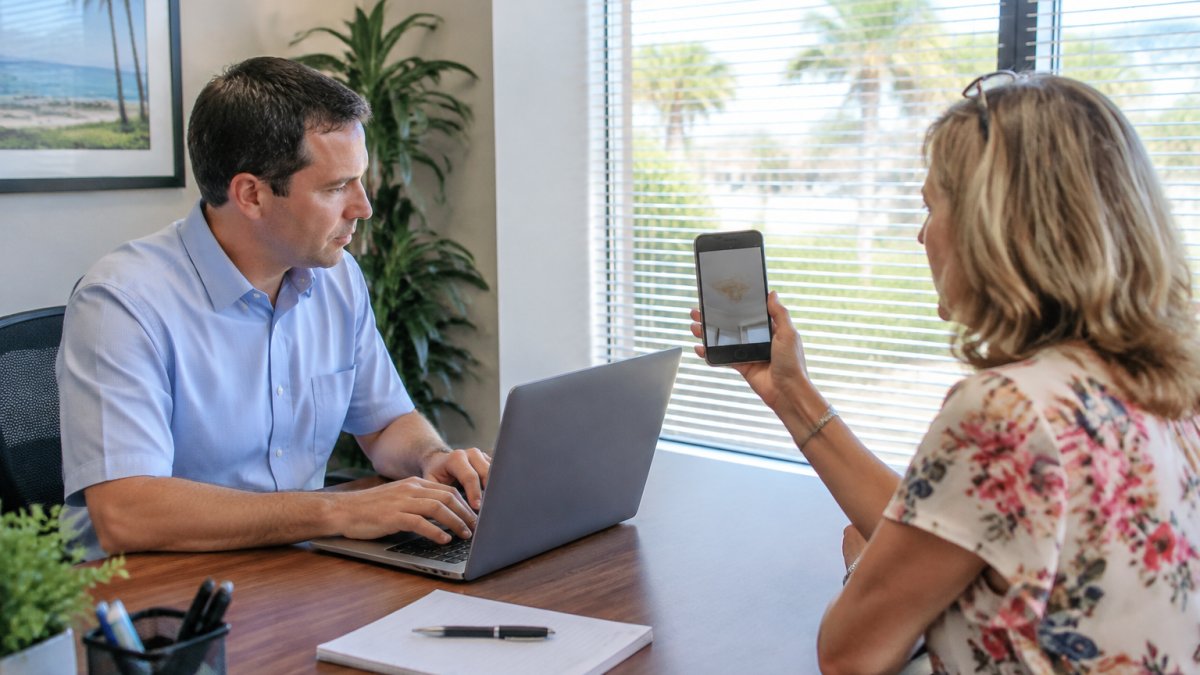
The fix is a single intake process. Every request enters through one door, gets a tracking number, and lands with the right person.
Start with these steps:
- Pick one primary channel, usually an online form or resident portal.
- Give every request a unique number the moment it arrives.
- Send the owner an automatic confirmation with their number and next steps.
- Route the request to the property manager within one business day.
A common mistake is letting phone calls and emails bypass the form. Those requests disappear from the log, and the board cannot see the backlog. If an owner calls, have staff enter the request while they are on the line.
What Every Request Must Capture
Every request needs the same core details, or the maintenance team makes extra trips and repairs stall.
Capture these fields on every submission:
- Owner name and unit number
- Best phone number and email
- Location of the problem, room by room
- A short description of the issue
- Photos or a short video
- Date and time the owner first noticed it
- Whether the owner is available for access
- Whether the owner has pets or access restrictions
Photos help the maintenance team understand a problem quickly, so requiring at least one photo on the form is a sound practice.
Using a Condo Maintenance Request Template
A condo maintenance request template is a standard form that captures the same details for every request, so nothing gets missed. It guides the owner through what to report and gives staff a consistent record.
Here is a template you can copy and adapt:
Maintenance Request Form
- Name: ______
- Unit number: ______
- Phone: ______ Email: ______
- Where is the problem? (kitchen, bathroom, hallway, exterior, common area): ______
- Describe the issue in one or two sentences: ______
- When did you first notice it? ______
- Upload at least one photo: ______
- Is the issue causing active damage right now? Yes / No
- Are you available for access? List days and times: ______
- Do you have pets or any access limits we should know about? ______
- Signature and date: ______
Keep the form short enough to finish in two minutes. Long forms get abandoned, and abandoned forms become phone calls that bypass the system.
Watch out: A template that asks for too little forces staff to chase owners for details. A template that asks for too much gets skipped. Test yours with a few owners before rolling it out.
Sorting Out Condo Owner Maintenance Responsibilities
The hardest question in condo maintenance is who pays and who fixes. Unit owners handle what sits inside their unit boundaries. The association handles the common elements.
The useful work is a decision tree that shows how to handle condo owner maintenance requests and walk a manager to a defensible answer.
- Locate the problem against the governing documents, not against intuition. Pull the declaration, bylaws, and any plats or boundary exhibits. Condo declarations typically define unit boundaries, limited common elements (balconies, parking spaces, storage lockers, some windows and doors), and general common elements. The same drywall patch can be an owner item on one wall and an association item on another depending on how the boundary is drawn.
- Identify the source, not just the symptom. A stain on a ceiling is a symptom. The source might be an owner's supply line, a shared plumbing stack, a failed roof flashing, or a neighbor's overflow. Responsibility usually follows the source and the component, so the request should capture where the water or damage originated, not only where it appeared.
- Check whether the damage crossed a boundary. Damage to another unit or to a common element generally pulls the association into the response even when the failed component was an owner item. Many declarations also allocate responsibility for damage caused by one unit's failure to that owner, which is a separate question from who makes the emergency repair.
- Apply any specific override in the documents. Declarations frequently shift responsibility for particular items, windows, doors, HVAC components, water heaters, washer pans, balcony surfaces, away from the default rule. Read the specific provision before quoting the general one.
- Separate the emergency fix from the cost allocation. The association may need to stop active damage immediately and sort out who pays afterward. Deciding cost is a board or manager judgment; delaying a repair to settle cost is how small leaks become insurance claims.
- Document the determination and the basis. Note which document section drove the answer. That record protects the board if the owner disputes the charge and gives the next manager a precedent.
A few patterns come up often. Water heaters and supply lines inside the unit are commonly owner responsibility, while the shared stack they connect to is commonly association responsibility.
The board sets policy and approves spending; the manager runs the process day to day. Our guide on what a condo property manager actually does explains where that line sits.
Assessing Urgency and Setting a Condo Maintenance Response Time
Condo maintenance response time is the window between a request arriving and the maintenance team taking action. Set targets by urgency level, not arrival order, so a burst pipe never waits behind a squeaky door.
Sort every request into three tiers:
| Priority | Examples | Target Response | Target Completion |
|---|---|---|---|
| Emergency | Active water damage, no heat in winter, sewage backup, safety hazard | Within 1 hour, 24/7 | Same day, temporary fix if needed |
| Urgent | Leaky faucet, broken appliance, damaged drywall, HVAC failure in summer | Within 1 business day | 3-5 business days |
| Routine | Cosmetic issues, minor wear, non-urgent repairs | Within 3 business days | 10-14 business days |
Publish these targets to owners. Clear expectations cut follow-up calls because owners know when to expect contact. Review your tiers each year with the board and adjust them to match vendor capacity.
Scheduling Repairs, Coordinating Vendors, and Managing Unit Access
Scheduling is where most workflows break. The repair itself is rarely the problem; getting a vendor and an owner in the same place at the same time is.
Lock down access rules before you schedule anything:
- Get written consent from the owner for entry, with dates and times.
- Give at least 24 hours' notice for non-emergency entry.
- Keep a key or access log with a named custodian.
- Allow emergency entry only when there is active damage or a safety risk, and document it every time.
For vendors, confirm scope, price, and completion window in writing. Track each work order through one status list: received, assigned, scheduled, in progress, complete. When a repair needs a second visit, note why. That record becomes your maintenance history and helps the board spot repeat failures.
Choosing Condo Maintenance Request Tracking Software
Condo maintenance request tracking software logs every request, assigns it a status, and keeps a record of the repair from start to finish. The right tool removes spreadsheets and email threads from the process.
Compare options on these criteria:
- Online request form owners can reach from a phone
- Automatic confirmation and status updates
- Photo and video uploads
- Work order assignment and vendor tracking
- Maintenance history by unit and by asset
- Reports on response time and backlog
- Access controls for board members and staff
Small associations can start with a shared inbox and a spreadsheet, though the manual approach becomes harder to manage as request volume grows. For more guidance on running community operations, the HCM community management blog covers practical workflows boards use every day.
Handling Emergency Requests, Escalations, and Repeat Complaints
Emergency handling needs a written plan, not a phone tree that lives in one person's head.
Emergency entry and consent. Non-emergency entry should rest on written owner consent with dates and times, plus at least 24 hours' notice.
Access logistics. Keep a key or access log with a named custodian and a sign-out trail. Confirm pets and access restrictions at intake so the vendor is not turned away at the door.
Escalation path. Set the rules before the first missed deadline:
- First follow-up: If a request misses its target response time, the manager escalates to the vendor and logs the contact.
- Second follow-up: If it misses again, the board president gets notified with the request number and the history.
- Disputed responsibility: If the owner and the association disagree on who pays, pause the cost argument, complete any needed repair to prevent further damage, and route the allocation question to the board with the documentation from the responsibility decision tree.
- **
Repeat requests. If the same issue comes back within 90 days, treat it as a repair quality problem, not a new request.
Preserving the record. Every escalation, entry, and repeat should leave a written trace: date, time, who was contacted, what was decided, and what happens next. Our guide on building an HOA emergency preparedness plan checklist walks through the structure.
Watch out: An emergency plan that names a single after-hours contact and no backup fails exactly when it is needed.
Set Up a Maintenance Workflow With Harshman Community Management
A strong maintenance workflow needs clear intake, defined responsibility, published response targets, and a tracking system the board can actually see.
Harshman Community Management supports HOAs, condominiums, and high-rise communities with local property management, specialized Virtual CAM services, and management-only support options. Our guide on which condo management services fit your board compares the options.
When you are ready to talk through your community's needs, request a proposal from our team and we will walk you through how a maintenance workflow would run for your association.
The gap between a well-run maintenance process and a chaotic one usually comes down to structure, not effort.
Frequently Asked Questions
What maintenance is a condo owner responsible for?
Condo owner maintenance responsibilities generally cover everything inside the unit boundaries: plumbing fixtures, appliances, interior walls, flooring, and the HVAC components serving only that unit. The association typically handles common elements such as the roof, exterior walls, hallways, elevators, and shared plumbing risers. The exact split lives in your declaration and bylaws, so check those documents before assigning a repair. A clear responsibility matrix in your condo maintenance request template prevents most disputes before they start.
How quickly should an association respond to a condo maintenance request?
Set condo maintenance response time targets by urgency rather than one blanket number. Targets should be set by urgency and published so owners know what to expect. The acknowledgment is not the repair, it is the confirmation that the request was received and assigned a priority level. Publish these targets so unit owners know what to expect and your maintenance team has a measurable benchmark.
What information should a condo owner include in a maintenance request?
A complete request form captures the unit number, owner name and contact information, the location of the problem, a description of what is happening, when it started, and photos or video. Ask whether the owner will be home for access and whether a pet is present. For water issues, ask if the owner has shut off the supply. Missing contact information or unit numbers is the most common cause of delayed repair requests, so make those fields required in your online portal or paper form.
When should a maintenance request be escalated to a contractor or property manager?
Escalate to a contractor when the repair falls outside your maintenance team's scope, requires a license, or involves a system such as the roof, elevator, or fire safety equipment. Escalate to the property manager when the request is a repeat issue, the owner disputes responsibility, or the response time target has been missed. Track escalation in your condo maintenance request tracking software so the board can see how often requests climb the chain and where the workflow breaks down.
