blog
Palm Beach HOA Management Services: A 2026 Guide

Last Updated: October 23, 2026
Quick Summary
HOA management services encompass the full range of administrative, financial, and operational support that keeps residential communities running smoothly, including financial management, vendor coordination, governance oversight, and resident communication. Professional management companies handle budgeting, reserve planning, compliance reporting, maintenance coordination, and day-to-day community supervision.
- Florida law requires HOA boards to maintain reserves, enforce governing documents, and provide financial transparency to residents under Chapter 720.
- Onsite management prevents expensive problems by addressing issues immediately, such as catching water leaks before they cause thousands in damage.
- Management contracts should clearly define scope of services, reporting requirements, fee structure, insurance coverage, and compliance responsibilities.
- South Florida communities need local expertise in hurricane preparedness, building codes, and vendor relationships to handle regional challenges effectively.
- Portfolio management costs less but provides less oversight, while onsite management costs more but offers daily problem-solving and resident responsiveness.
Table of Contents
- What Palm Beach HOA Management Services Include
- Florida HOA Board Responsibilities and Management Oversight
- HOA Management Company Duties in South Florida Communities
- How to Evaluate an HOA Management Contract Checklist
- Understanding HOA Management Fees and Service Models
- Why Local Expertise and Emergency Preparedness Matter
- Selecting the Right Management Partner for Your Community
- Frequently Asked Questions
What Palm Beach HOA Management Services Include
HOA management services encompass the full range of administrative, financial, and operational support that keeps residential communities running smoothly. At Harshman Community Management, we understand that effective community association management requires more than just collecting fees and scheduling maintenance. It demands expertise across multiple disciplines: governance oversight, financial stewardship, regulatory compliance, vendor coordination, and resident communication.
The scope of these services typically covers several core functions. Financial management includes budgeting, reserve planning, assessment collection, and compliance reporting. Operational oversight spans vendor management, maintenance coordination, and day-to-day community supervision. Governance support helps boards navigate their legal responsibilities and make informed decisions. Administrative services handle everything from meeting scheduling to record-keeping to resident inquiries.
What separates professional management from amateur attempts is consistency and accountability. Many communities try to operate with volunteer boards handling everything themselves. That approach works until it doesn't, usually when a major expense arises, a regulatory deadline is missed, or a conflict escalates without proper documentation.
The reality is that communities need someone watching the details. Property values depend on it. Resident satisfaction depends on it. Legal compliance absolutely depends on it.
Florida HOA Board Responsibilities and Management Oversight
Florida law creates specific duties for homeowners association boards, and boards that don't understand these duties create liability for themselves and their communities. According to Florida Statutes Chapter 720, HOA boards must maintain reserves, enforce governing documents, and provide financial transparency to residents. These aren't optional guidelines, they're legal requirements with real consequences for non-compliance.
Board responsibilities under Florida law include preparing annual budgets, conducting reserve studies, maintaining insurance coverage, enforcing community rules consistently, and providing financial statements to residents within specific timeframes. Boards must also hold annual meetings, maintain accurate records, and disclose conflicts of interest.
This is where professional HOA management company duties become essential. Management companies handle the administrative burden that allows boards to focus on governance decisions rather than day-to-day execution. A good management partner ensures compliance deadlines are met, financial records are accurate, and policies are enforced uniformly across the community.
The board remains legally responsible for the community's overall direction. Management executes that direction. This division of labor protects both the community and the board members individually.
HOA Management Company Duties in South Florida Communities
Professional management companies in South Florida handle responsibilities that range from routine to complex. Understanding what a capable management partner actually does helps boards evaluate whether they're getting genuine value or just paying for basic administrative work.
Onsite Management and Daily Operations
Onsite management means having a qualified professional physically present at the community to oversee daily operations. This person handles resident requests, supervises maintenance staff, conducts inspections, and addresses issues before they escalate into problems. In high-rise communities and larger associations, onsite management is often essential because problems develop quickly and require immediate attention.
The onsite manager serves as the community's first responder. A resident reports a water leak, the manager coordinates the emergency response and documents the incident. A vendor fails to complete work to specification, the manager conducts the inspection and holds the vendor accountable. A resident violates community rules repeatedly, the manager documents violations and escalates appropriately to the board.
What most communities miss is that onsite management prevents expensive problems. A small leak caught immediately costs a few hundred dollars. That same leak ignored for weeks can cause thousands in water damage. A vendor cutting corners gets corrected on day one instead of being discovered during final inspection. Consistent rule enforcement means residents take community standards seriously instead of gradually lowering them.
Financial Management and Compliance
Financial management in HOA communities requires precision and transparency. This includes preparing annual budgets based on community needs, collecting assessments, paying vendors, maintaining reserve accounts, and providing residents with accurate financial statements. In Florida, these functions are governed by specific statutory requirements that carry penalties for non-compliance.
A capable management company maintains separate accounts for operating funds and reserves, ensuring that reserve money isn't accidentally spent on operating expenses. The company prepares monthly financial statements showing income, expenses, and account balances. Annual budgets are developed with input from the board and reflect actual community costs rather than wishful thinking.
Reserve studies are a critical component of financial management. These studies project long-term capital needs, roof replacement, pavement resurfacing, structural repairs, and recommend funding levels to ensure the community can afford these expenses when they arise. Many communities underestimate reserves because they underestimate the true cost of major replacements. A professional management company works with reserve specialists to provide realistic projections.
How to Evaluate an HOA Management Contract Checklist
When selecting a management company, the contract itself reveals what you're actually getting. Many boards sign agreements without understanding what they're committing to or what protections they have.
Scope of services must be clearly defined. Does the contract include onsite management or portfolio management only? Are financial statements included? What about vendor management and maintenance coordination?
Reporting requirements should be specific. How often will you receive financial statements? When will budgets be prepared? What happens if reports are late?
Fee structure and contract terms deserve careful attention. What exactly is included in the management fee? Are there additional charges for special services? How long is the contract term, and what are the termination provisions?
Insurance and bonding protect the community if something goes wrong. The contract should specify what insurance the management company carries and what bonding is required.
Compliance responsibilities should be documented. Who ensures that reserve studies are completed? Who tracks regulatory deadlines? Who maintains records to meet Florida's statutory requirements? Clarity here prevents missed deadlines and regulatory violations.
Create a simple checklist before contract discussions even begin. What services does your community actually need? What problems have you experienced with previous management? What outcomes matter most to your board?
Understanding HOA Management Fees and Service Models
Management fees vary based on community size, service level, and what's included. Understanding the different fee models helps boards evaluate whether they're getting genuine value or just paying for the minimum.
Portfolio management typically involves a management company overseeing multiple communities from a central office. A portfolio manager handles financial reporting, compliance, and administrative functions but may not have onsite presence at each community.
Onsite management includes a full-time or part-time manager physically present at the community. This manager handles daily operations, resident issues, vendor coordination, and immediate problem-solving. Onsite management costs more than portfolio management but provides a level of oversight and responsiveness that larger or more complex communities often need.
Virtual CAM services represent a newer model where management companies provide specialized support for specific functions, financial advisory, compliance review, or board support, without full operational management.
Fees alone don't tell the full story. A community paying lower fees for portfolio management might get less responsive service and miss important compliance requirements. A community paying higher fees for onsite management gets daily oversight that prevents problems.
Many boards focus on fee reduction when evaluating management companies. That's understandable given budget constraints, but it's often the wrong priority.
Why Local Expertise and Emergency Preparedness Matter
South Florida communities face specific challenges that require local knowledge. Hurricanes, saltwater corrosion, flooding, and rapid real estate changes create management issues that a company without regional experience may not anticipate or handle well.
Local expertise means understanding how Florida regulations apply to your specific community type. A management company familiar with Palm Beach County and South Florida knows the local building codes, understands how county regulations affect community operations, and has relationships with local vendors and contractors.
Emergency preparedness is non-negotiable in hurricane country. A capable management company maintains documented emergency protocols, knows how to coordinate with first responders, has vendor relationships for emergency repairs, and can communicate effectively with residents during a crisis. When a hurricane hits, you don't want to discover that your management company has no emergency plan.
Ask potential management companies directly about their emergency protocols. What happens immediately after a hurricane? How do they coordinate emergency repairs? How do they communicate with residents? How do they document damage for insurance purposes? Companies with real experience in South Florida will have detailed answers. Companies without that experience will give vague responses.
Selecting the Right Management Partner for Your Community
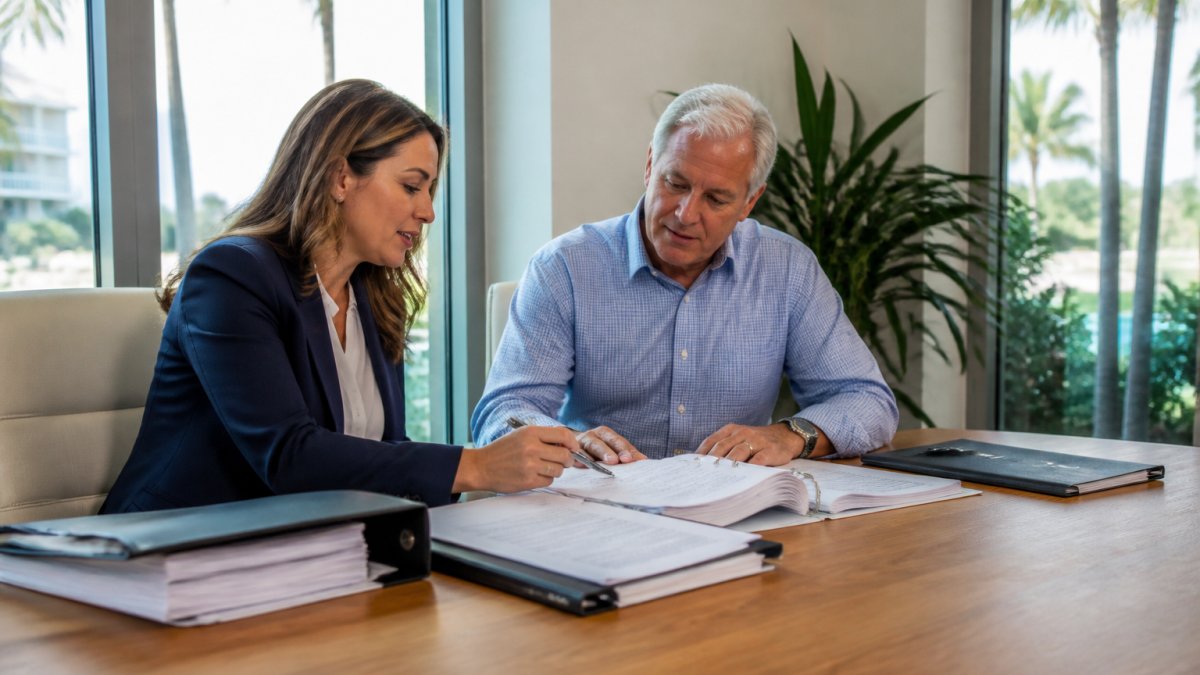
Choosing a management company is one of the most important decisions a board makes. The wrong choice creates years of frustration, compliance problems, and poor resident experience. The right choice transforms community operations.
Start by clearly defining what your community needs. Is your primary concern financial management and compliance? Do you need active onsite oversight? Are you transitioning from one management company to another?
Evaluate potential management companies based on their experience with communities similar to yours. How many communities do they manage? What's the size range? How long have they been managing communities in Palm Beach and South Florida?
Interview management companies about how they handle the issues your community has struggled with. If financial reporting has been a problem, ask specifically how they approach financial management and reporting.
Review sample contracts carefully before signing. Don't accept boilerplate language that favors the management company. Negotiate terms that protect your community. Understand exactly what services are included, what the fee structure is, and what your termination rights are.
Selecting a management partner that understands South Florida's unique challenges and delivers consistent, professional service is essential for community success. At Harshman Community Management, we provide comprehensive HOA management services tailored to the specific needs of Palm Beach and South Florida communities, from onsite management and financial oversight to specialized Virtual CAM services and board support.
| Service Type | Best For | Key Features |
|---|---|---|
| Portfolio Management | Smaller communities with straightforward needs | Financial reporting, compliance, administrative support |
| Onsite Management | Larger or complex communities | Daily oversight, vendor coordination, resident responsiveness |
| Virtual CAM Services | Communities needing specialized expert support | Financial advisory, compliance review, board guidance |
Frequently Asked Questions
What services should a quality HOA management company provide?
A comprehensive HOA management company handles administrative support, financial accounting and budget preparation, assessment collection, vendor management, maintenance coordination, resident communication, and board governance support. Many also offer specialized services like Virtual CAM for developers, emergency preparedness protocols, and portfolio management for associations with multiple properties. The scope depends on your community's needs and whether you choose onsite management, management-only support, or virtual services.
What are the main Florida HOA board responsibilities even with a management company?
Boards retain fiduciary duty and ultimate governance authority. You remain responsible for setting policy, approving budgets and reserve studies, enforcing rules consistently, holding regular meetings, maintaining insurance, and ensuring compliance with Florida Statutes Chapter 718 (condominiums) or Chapter 720 (HOAs). A management company executes daily operations and provides recommendations, but the board makes final decisions and oversees the manager's performance.
How do HOA management fees typically work, and what affects the cost?
Fees vary based on community size (number of units), service level (onsite vs. virtual), amenities managed, and local market rates. Pricing depends on the specific services included, administrative support, financial management, vendor coordination, and specialized services like high-rise management or developer support all influence the total. Contact management firms directly for quotes tailored to your community's profile and service requirements.
What should I look for in an HOA management contract checklist?
Review the scope of services (which duties are included), fee structure and payment terms, contract length and renewal conditions, performance expectations and response times, insurance and liability coverage, termination clauses, and communication protocols. Confirm the manager has proper licensing and credentials, understand how reserve studies and special assessments are handled, verify emergency procedures are documented, and clarify how technology and financial reporting will be managed. Request references from similar-sized communities in the area.
