ultimate-guide
The Florida Condo Management Hurricane Protocols Guide
Last Updated: November 7, 2026
Quick Summary
Florida condo management hurricane protocols are the documented procedures an association follows before, during, and after a storm, covering roles, communication, property protection, and recovery. A working plan assigns every action to a named person and backup, shifts from monitoring to activation at the hurricane watch stage, and documents decisions and damage in writing.
- Hurricane season opens June 1, so pre-season verification runs from May 1 to May 31.
- A hurricane watch means conditions are possible within 48 hours; a warning means expected within 36.
- Set the hard deadline for balcony clearance at the watch stage, not the warning stage.
- Name one spokesperson and use at least two channels, such as email plus text alerts.
- Recovery starts with documentation: photograph every unit and common area before debris is moved.
Table of Contents
- Why Florida Condo Management Hurricane Protocols Matter
- Your Florida Condo Hurricane Preparedness Checklist
- Building a Condo Hurricane Emergency Plan Template
- The Hurricane Communication Plan for Condo Associations
- Securing Balconies, Common Areas, and Building Systems
- Evacuation Procedures and Resident Accessibility Planning
- Condominium Legal Duties and Board Decision-Making
- Your Condo Hurricane Recovery Checklist
- Frequently Asked Questions
Why Florida Condo Management Hurricane Protocols Matter
A written hurricane protocol is the difference between a board that reacts and a board that executes. Florida condo management hurricane protocols are the documented procedures a condominium association follows before, during, and after a tropical storm or hurricane, covering roles, communication, property protection, and recovery.
The stakes are structural, not just administrative. The Florida Division of Emergency Management publishes the statewide planning framework that local association plans should align with.
Below, we break down each phase of a working plan, from the pre-season window through recovery, and show where boards most often leave gaps. Boards that decide they need professional help can compare South Florida condo management services by onsite, portfolio, and management-only models, including their hurricane plans.
Your Florida Condo Hurricane Preparedness Checklist
A Florida condo hurricane preparedness checklist works when it is dated and assigned, not when it is comprehensive. For a ready-made structure that assigns board roles, stocks supplies, and sets communication steps, use this HOA emergency preparedness plan checklist. The most common failure we see is a plan that lists tasks without naming who owns each one or when it must be finished.
Pre-Season Tasks (May 1 to May 31)
Hurricane season opens June 1 (noaa.gov). The pre-season month is for verification, not planning. Boards should confirm rather than decide.
- Confirm the plan is current. Reassign every role to a named person and a named backup. Board turnover is the single biggest cause of stale plans.
- Verify insurance coverage and deductibles. Confirm the windstorm deductible amount, the claims contact, and whether the policy requires a pre-storm condition report.
- Inspect roofs, drainage, and shutters. Document existing deficiencies in writing before storm season so pre-existing damage is not confused with storm damage later.
- Audit emergency supplies. Check flashlights, batteries, first-aid kits, and drinking water stores in common areas. Replace expired items.
- Update the resident contact list. Collect mobile numbers and email addresses, and record which residents need evacuation assistance.
- Confirm vendor contacts. Get written availability commitments from your roofing, landscaping, water mitigation, and generator vendors before the season starts.
Watch and Warning Activation Steps
A hurricane watch means conditions are possible within 48 hours; a warning means they are expected within 36 (Social Media Hurricane). The plan should shift from monitoring to activation at the watch stage.
- Watch: convene the board, confirm staff assignments, begin resident communication, and start securing loose objects from balconies and common areas.
- Warning: close or install hurricane shutters, shut down non-essential building systems per the plan, move vehicles from flood-prone areas, and issue the final resident notice.
Watch out: boards that wait for a warning to begin balcony and common-area securing routinely run out of time. Loose patio furniture becomes projectile debris in sustained wind.
Building a Condo Hurricane Emergency Plan Template
A condo hurricane emergency plan template should follow a role-based structure, not a task list. Assign every action to a position, then name the person filling it.
| Plan Section | Owner | Timing | Output |
|---|---|---|---|
| Pre-season verification | Board president | May | Signed checklist |
| Resident communication | Property manager | Watch stage | Notice log |
| Building securing | Maintenance lead | Watch to warning | Photo record |
| Utility shutdown | Maintenance lead | Warning | Shutdown log |
| Damage assessment | Board plus manager | Post-storm | Inspection report |
| Insurance claim | Treasurer | Post-storm | Claim file |
For boards that want a deeper, step-by-step structure, our guide on how to build an HOA emergency preparedness plan checklist expands each row into assignable tasks.
The Hurricane Communication Plan for Condo Associations
A hurricane communication plan for condo associations defines who speaks to residents, through which channel, and at what interval. Confusion about authority is the most common breakdown we see.
Name one spokesperson, usually the board president or the property manager, and route all official updates through that person. Use at least two channels, such as email plus a text alert system, because power and internet outages are common.
Set a communication cadence in advance: an initial notice at the watch stage, an update when a warning is issued, a status message after the storm passes, and a re-entry notice once the building is cleared. Keep a written log of every message sent and the time it went out. That log becomes evidence if a resident later claims they were not informed.
Securing Balconies, Common Areas, and Building Systems
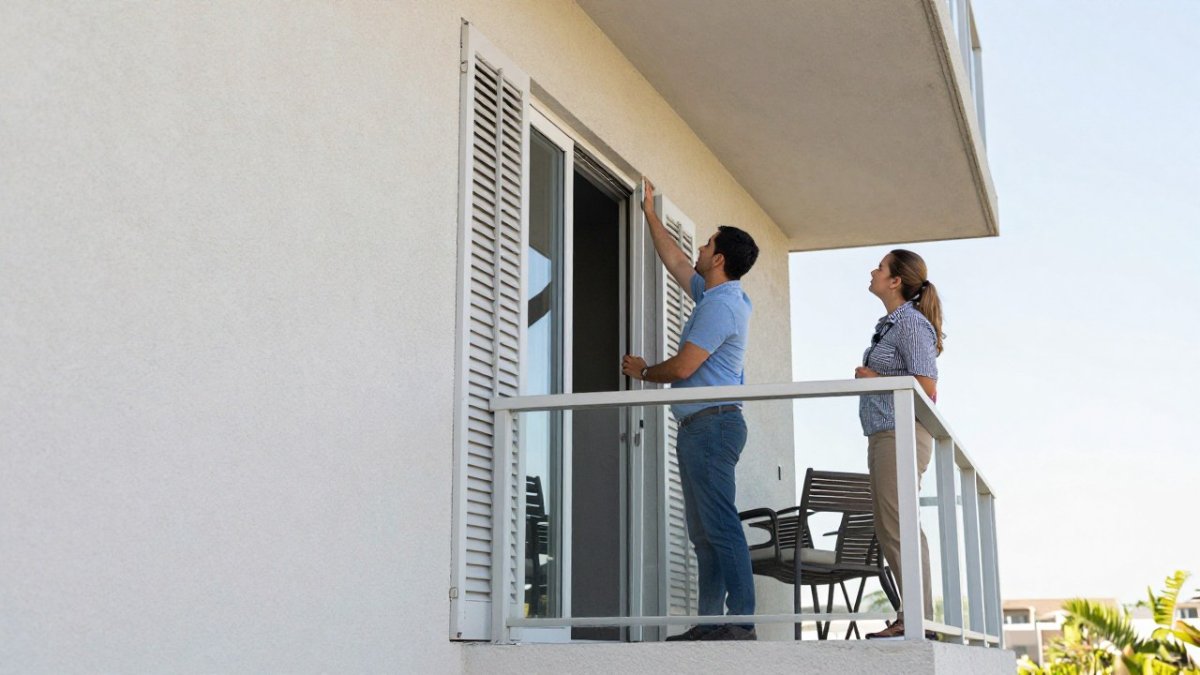
Securing a building means removing what wind can carry and shutting down what water and power can damage. Balconies and patios come first.
Then move to building systems, which is where most plans are thinnest. Treat utility shutdown as a written sequence with a named operator and a second person who can verify each step. The sequence should cover:
- Elevators. Decide in advance whether cars are parked at an upper floor or taken out of service, and post the decision so residents are not trapped by a mid-storm outage. Confirm the elevator contractor's emergency contact and response expectations before the season.
- Generators and fuel. Confirm fuel level, fuel vendor delivery commitments, and the generator's run-time at expected load. Verify that the transfer switch and exhaust clearances are unobstructed, and record the last load test date.
- Water and plumbing. Know the location and operation of the main water shutoff and any unit-level shutoffs, and decide whether water is shut off before landfall or left on for fire protection. Document the rationale either way.
- Fire and life-safety systems. Confirm that fire alarm monitoring, sprinkler systems, and emergency lighting remain powered or have documented backup. Do not shut down life-safety systems without the fire official's guidance.
- Electrical equipment. Identify panels, pool equipment, irrigation controllers, and any equipment in flood-prone rooms, and record which breakers are switched off and by whom.
- Restart decisions. Write the restart sequence as carefully as the shutdown sequence. Generators, elevators, and water systems should be restarted only after inspection, and the plan should name who authorizes restart.
Verify that roof drains and site drainage are clear before landfall, since standing water is a leading cause of interior damage. Windows and shutters follow the manufacturer's hurricane protection specifications. Confirm that every unit's shutter panels are present, labeled, and stored accessibly before the season starts.
Watch out: a shutdown log that lists tasks but not the person who performed each one is nearly useless after a loss, because the association cannot show the carrier or a resident that the sequence was followed.
Evacuation Procedures and Resident Accessibility Planning
Evacuation procedures must account for residents who cannot self-evacuate. When a mandatory evacuation order is issued, the association should distribute the order, the nearest evacuation route information, and re-entry instructions in the same notice.
Build an accessibility list during the pre-season. Identify residents with mobility limitations, medical equipment requiring power, or no transportation, and confirm a plan for each. Coordinate with county emergency management rather than improvising during the storm.
Watch out: associations that collect accessibility information informally, without a stated purpose and consent, create a privacy problem. Document the purpose and limit access to the list.
Condominium Legal Duties and Board Decision-Making
Board duties during a storm emergency come from the association's governing documents and state condominium law, and they can change.
Start with the governing documents. The declaration, bylaws, and rules usually set notice requirements, emergency spending limits, and the board's authority to enter units or common elements.
In practice, the board's job is to make and record decisions: approving emergency expenditures, authorizing building access, directing the property manager, and deciding when to close common areas or shut down systems.
Hurricane-protection requirements deserve their own line in the plan. Confirm whether the association or the unit owner is responsible for shutters, windows, and doors, and how the documents allocate that cost.
Distinguish legal information from legal advice. Boards that want local operational support alongside their legal counsel can review Harshman Community Management's community association services, which cover hurricane and high-rise operations.
Your Condo Hurricane Recovery Checklist
Recovery starts with documentation, not cleanup. A condo hurricane recovery checklist should capture condition evidence before any debris is moved.
- Secure the site. Restrict access until structural safety is confirmed.
- Photograph and document. Record every unit and common area before repairs begin.
- Notify the insurance carrier. Report the loss promptly and follow the carrier's claim instructions.
- Prioritize repairs. Separate life-safety and water-intrusion work from cosmetic repairs.
- Communicate re-entry. Issue a clear notice on access, elevators, and utilities.
- Track costs. Keep receipts and contractor invoices tied to the claim file.
For boards ready to formalize recovery responsibilities, you can request proposals from a management company that handles hurricane protocols.
The real test of a hurricane protocol is not the document, it is whether every role has a name attached before June 1. If your board cannot answer who secures the building, who speaks to residents, and who files the claim, the plan needs work now. Harshman Community Management supports condominium and HOA boards with local community association management, Virtual CAM services, and management-only support. Get started with Harshman Community Management and put a role-based hurricane protocol in place before the next season.
Frequently Asked Questions
What should a condo hurricane preparedness plan include?
A complete plan covers five areas: a written chain of command with named backups, a pre-season checklist for roofs, drainage, shutters, and landscaping, a resident communication schedule, evacuation and accessibility procedures, and a post-storm damage assessment and insurance claim process. It should also include a building systems shutdown sequence for water, power, and elevators. Review and update the plan every year before June 1, and store copies both digitally and off-site so the board can act even if the management office is inaccessible.
How should a condo association communicate with residents during a hurricane?
Use at least two channels, such as email plus a text alert system, and post printed notices in lobbies and elevators. Send a pre-season message with the plan summary, then updates at landfall minus 72, 48, and 24 hours, and a final message when the storm passes. Include evacuation orders, shuttle schedules, office hours, and a phone number for urgent questions. After the storm, send a damage assessment update within 24 hours and a recovery timeline within 72 hours, keeping messages short and consistent.
Who is responsible for hurricane preparation and storm damage in a Florida condo?
The association is generally responsible for common elements, including roofs, windows, shutters, elevators, and shared drainage, while unit owners handle interior items and personal property. Florida law and the declaration govern the split, and the board has a duty to maintain and repair common areas. For damage, the association files the master policy claim for shared property, and owners file on their HO-6 policies for interior damage. Document everything with photos and keep a shared log of repairs and costs.
What should a condo association do after a hurricane?
Wait for official clearance, then conduct a safety inspection before allowing residents back. Check for structural damage, water intrusion, and downed power lines, and photograph every affected area. Contact the insurance carrier within the deadline stated in the policy, usually 72 hours, and begin emergency repairs to prevent further damage. Restore utilities and elevators only after inspection, and send residents a recovery timeline with cleanup rules, debris pickup dates, and contact information for the board and manager.
How often should a condo association review its hurricane plan?
Review the plan annually before hurricane season, ideally in April or May, and update it whenever the board changes, a new property manager is hired, or building systems are modified. After any near-miss or actual storm, hold a debrief within 30 days and revise weak points. Keep a version history so the board knows which plan is current, and distribute the updated summary to all residents by June 1.
