how-to
9 Things a Condo Property Manager Actually Does

Last Updated: November 5, 2026
Quick Summary
A condo property manager runs the daily operations of a condominium association, coordinating building maintenance, collecting condo fees, managing vendors, answering resident concerns, and reporting to the condo board. The manager carries out board policies and handles site management, while the board sets policy and approves spending.
- Nine core duties cover daily operations, maintenance, work orders, vendors, fees, budgets, communication, rule enforcement, and inspections.
- The board sets policy and approves contracts, while the manager executes and brings recommendations to the board.
- Managers are typically paid a management fee set by the contract with the association.
- Ask for a written breakdown of what the fee covers before you sign.
- A condo property manager does not set the assessment amount, approve the budget, or change community rules.
Table of Contents
- What a Condo Property Manager Does Day to Day
- Condo Property Manager Responsibilities: The Nine Core Duties
- Condo Board vs Property Manager Roles: Who Decides What
- How Condo Property Managers Get Paid
- Resident Communication, Rule Enforcement, and Complaint Resolution
- Emergency Planning, Inspections, and Legal and Insurance Duties
- Your Condo Property Manager Hiring Checklist
- What Condo Property Managers Do Not Control
- Frequently Asked Questions
What a Condo Property Manager Does Day to Day
A condo property manager runs the daily operations of a condominium association. That means coordinating building maintenance, collecting condo fees, managing vendors, answering resident concerns, and reporting to the condo board.
The role is easy to misunderstand. A condo property manager is not the board's boss and not a landlord.
Below, we break down the nine core duties, who decides what, how managers get paid, and what to check before you hire one.
Condo Property Manager Responsibilities: The Nine Core Duties
Nine duties cover most of the job. Each one ties back to protecting the association's property, money, and records.
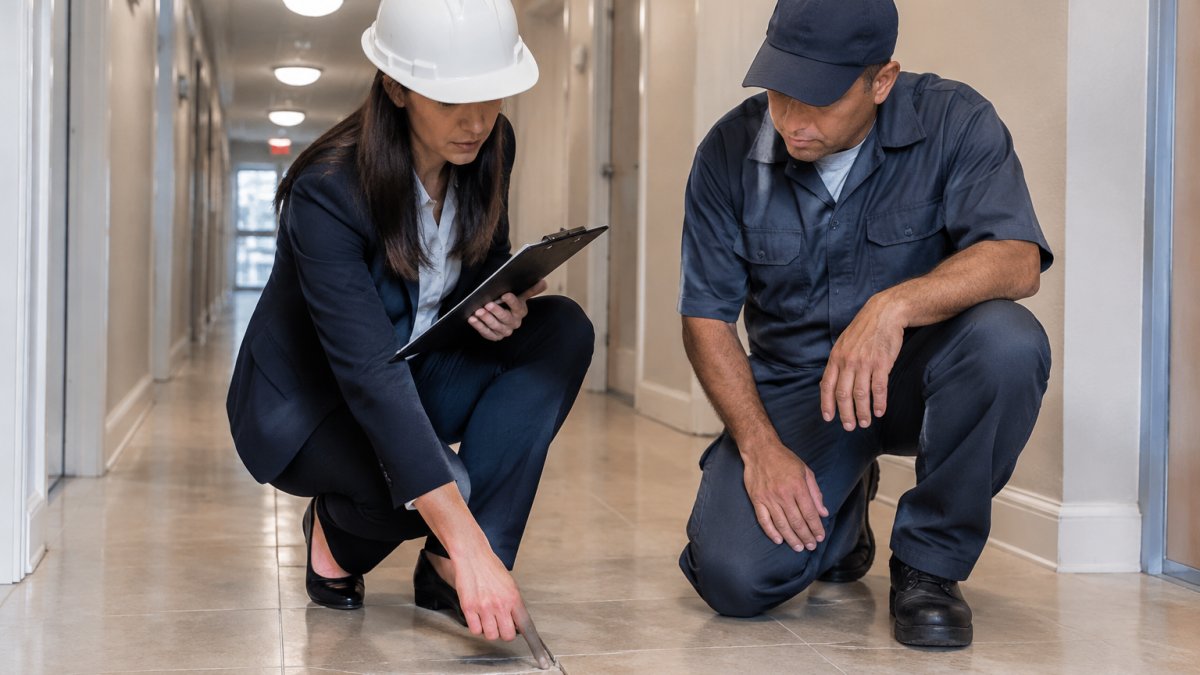
- Daily operations and site management: walking the property, checking shared facilities, and logging issues.
- Building maintenance and preventive maintenance: scheduling service before small problems become repairs.
- Repair requests and work orders: logging service requests, assigning trades, and confirming the fix.
- Vendor relations and contractor oversight: getting bids, checking insurance, and supervising work.
- Condo fees, fee collection, and delinquent accounts: sending account statements and following up on late payments.
- Budgeting and financial reporting: tracking operating expenses and preparing reports for the board.
- Resident communication and owner relations: notices, updates, and day-to-day answers.
- Rule enforcement and complaint resolution: applying community rules the same way to every unit owner.
- Inspections, emergency planning, and legal and insurance coordination: keeping the building ready for what goes wrong.
Maintenance, Common Areas, and Work Orders
Maintenance is where residents judge a manager fastest. Common areas, shared facilities, and building systems all need a schedule, not just a reaction.
A common mistake is treating maintenance as purely reactive. Preventive maintenance on elevators, roofs, pool equipment, and life-safety systems is generally a sound way to limit emergency repairs and protect the reserve fund.
Work orders should be logged, prioritized, and closed out with a record.
Vendor Selection, Contracts, and Project Oversight
Vendors do the physical work, so vendor oversight decides whether the building holds up.
The board usually approves the contract. The manager then coordinates the project: scheduling building access, notifying residents, and confirming the work matches the scope.
Watch out: skipping the insurance certificate check is the mistake that hurts most. An uninsured contractor on a roof creates a liability the association did not plan for.
Condo Fees, Budgets, and Financial Reporting
Money is where boards feel the most risk. The manager drafts the annual budget, tracks operating expenses against it, and prepares financial reports for board review.
Fee collection is part of the same job. The manager sends account statements, monitors payments, and flags delinquent accounts early. Board policies decide the collection steps; the manager carries them out.
Good financial reporting is boring on purpose. For a closer look at reporting habits, see 9 HOA Financial Transparency Practices That Build Trust, and for funding big-ticket repairs, read how an HOA plans its reserve fund.
Condo Board vs Property Manager Roles: Who Decides What
The board decides, and the manager executes. That split is the single most useful thing a new board member can learn, and it is also where most day-to-day friction starts.
The condo board sets policy, approves the budget, and votes on major contracts and rule changes. The condo property manager handles daily operations, vendor coordination, and communication, and brings recommendations to the board.
| Decision | Condo Board | Property Manager | Unit Owner |
|---|---|---|---|
| Set community rules | Approves | Enforces | Follows |
| Annual budget | Votes to adopt | Drafts and tracks | Pays assessments |
| Major contracts | Approves | Solicits bids, oversees | , |
| Repair requests | Sets policy | Logs and coordinates | Reports and grants access |
| Delinquent accounts | Sets collection policy | Sends notices, follows up | Pays on time |
| Reserve spending | Approves | Reports and schedules | , |
| In-unit repairs | Sets maintenance policy | Coordinates common-element work | Maintains interior systems per governing documents |
Inside the Unit vs. Shared Property: A Repair Matrix
The question managers hear most is some version of "who fixes this?" The answer depends on the governing documents, but most declarations draw a line between unit boundaries and common elements. A practical matrix looks like this:
- Inside the unit, owner responsibility (typical): interior paint, flooring, cabinets, countertops, interior doors, light fixtures, and appliances that serve only that unit.
- Inside the unit, association responsibility (typical): plumbing and electrical lines that serve more than one unit, structural elements, and systems the declaration defines as common even when they run through a unit.
- Limited common elements (typical): balconies, patios, parking spaces, and storage lockers assigned to one unit but maintained under association rules. The declaration usually states who repairs what.
A common pattern is for the association to handle the building envelope and shared systems while owners handle what is inside their drywall.
Watch out: assuming "inside the unit" always means owner responsibility. A leak from a shared riser that damages a unit's ceiling is often an association repair, and treating it as an owner problem invites a dispute and a possible claim.
Where the Lines Blur in Practice
When those lines blur, boards micromanage and managers stall. Three habits keep the split clean:
- Write decisions down. A board vote on a repair threshold, a collection step, or a vendor contract should be recorded in the minutes so the manager can act without re-asking.
- Route requests through one channel. Owners submit work orders to the manager, not to individual board members. The manager logs, prioritizes, and reports back.
- Separate policy from execution. The board says "we will assess a late fee after 30 days." The manager sends the notice. The board does not draft the notice, and the manager does not set the fee.
Clear boundaries between manager, board, and owners keep both sides moving, and they give the manager a defensible answer when an owner asks for an exception.
How Condo Property Managers Get Paid
Condo property managers are typically paid a management fee set by the contract with the association.
Fee structures vary across the industry, and the scope of included services should be confirmed in writing before signing.
Ask for a written breakdown of what the fee covers before you sign. A lower fee that excludes inspections or financial reporting is not really lower.
Resident Communication, Rule Enforcement, and Complaint Resolution
Residents judge management by how quickly and fairly it responds.
The manager sends notices, answers resident concerns, and serves as the board liaison. Rule enforcement has to be even.
Complaint resolution works best with a written trail: the concern, the response, and the outcome.
For the notice, fine, and hearing steps that hold up, see HOA rule enforcement best practices.
Emergency Planning, Inspections, and Legal and Insurance Duties
Emergencies expose whether a management company is prepared or just promising.
Managers in this role typically coordinate routine inspections and keep building records. Hurricane-season planning should be reviewed with the association's insurance agent and attorney.
Legal duties vary by state and by governing documents. For a ready list of roles, supplies, and communication steps, use this emergency preparedness plan checklist.
Your Condo Property Manager Hiring Checklist
Hiring well comes down to a few questions asked in the right order, and to comparing proposals on the same terms. Most boards compare monthly fees and stop there, which is how they end up with a manager who does not cover inspections, after-hours calls, or financial reporting.
Step 1: Define What You Need Before You Solicit
Write a short scope before you contact any firm. Include unit count, building type, whether you need onsite staff, how many board meetings per year, and which services are must-haves versus nice-to-haves. A written scope lets you compare proposals line by line instead of guessing what each fee includes.
Step 2: Compare Proposals on the Same Line Items
Ask every firm to price the same list. A common pattern is for one proposal to look cheaper because it excludes project coordination, site inspections, or after-hours emergency response. Request a line-item breakdown and check these categories:
- Monthly management fee and what it covers
- Per-unit or per-door charges, if any
- Extra-service rates for project coordination, violation inspections, and architectural review
Step 3: Check References the Right Way
Ask for references from communities of similar size and building type, then ask each reference three questions: How often did the manager visit the property? How quickly were work orders closed? Did the monthly financial report arrive on time and reconcile? A reference who cannot answer those is not a useful reference.
Step 4: Read the Contract Terms Boards Overlook
- Term and renewal: multi-year terms with automatic renewal are common; know how to exit.
- Termination for cause: confirm the notice period and what counts as cause.
- Records ownership: the association's records, work-order history, and financial data should belong to the association and transfer at termination.
Step 5: Set Service-Level Expectations in Writing
Define measurable expectations before signing: response time for resident emails and calls, work-order completion targets, monthly report delivery date, and how after-hours emergencies are handled. These become the basis for the annual review.
Hiring Checklist
- Confirm the license and local experience the role requires
- Ask how rule enforcement is handled when a board member is the one in violation
- Request sample monthly financial reports and reserve updates
Smaller associations sometimes wonder whether professional management fits their size. Whether a given model is appropriate depends on the community's needs, and the response-time expectations should be confirmed in writing.
When you are ready to compare service models, per-unit pricing, and hurricane plans, see which condo management services fit your board.
What Condo Property Managers Do Not Control
Managers carry out board decisions; they do not make them. That limit is worth stating plainly, because most board frustration comes from expecting otherwise.
A condo property manager does not set the assessment amount, approve the budget, or change community rules. Those are board votes.
What the manager does control is process: whether work orders close, whether reports arrive on time, and whether every owner gets the same answer.
Frequently Asked Questions
What are the main responsibilities of a condo property manager?
A condo property manager coordinates the building's daily operations: scheduling preventive maintenance, handling repair requests and work orders, soliciting bids from contractors, collecting condo fees, preparing budgets and financial reports, enforcing community rules, and communicating with unit owners. The board sets policy and approves spending; the manager carries out those decisions and keeps the board informed. Most management contracts also assign emergency response, property inspections, and record keeping to the manager.
What is the difference between a condo board and a property manager?
The board is elected by unit owners and holds fiduciary and decision-making authority: it sets policy, approves budgets, and votes on major projects. The property manager is a hired professional who executes those decisions day to day. Clear boundaries matter. A manager who starts acting like a board member, or a board that micromanages routine work orders, creates friction. Put the split in writing so owners know who to call for what.
How do condo property managers get paid?
Most condo property managers are paid a recurring management fee, billed monthly or annually and set in the management agreement. The fee structure and its amount depend on the scope of service and the community. For current pricing and a quote, contact Harshman Community Management through its website. Some contracts add fees for extra services such as project coordination or after-hours emergency calls. Ask for an itemized proposal so the board can compare scope, not just the headline number.
What should a condo association look for when hiring a property manager?
Start with a written hiring checklist: verify licensing and credentials, confirm experience with communities of similar size and building type, check references from current board members, and review sample financial reports and communication schedules. Ask how they handle after-hours emergencies, rule enforcement, and vendor bidding. Get the scope of services, fee structure, and termination terms in writing. A manager who answers these questions specifically, rather than in generalities, is the safer hire.
Boards that separate policy from operations get faster answers and fewer surprises. Harshman Community Management supports HOAs, condominiums, and high-rise communities with onsite and portfolio management, specialized Virtual CAM services, and management-only support options for developers. If your board wants consistent rule enforcement and clear financial reporting, get started with Harshman Community Management and put a defined process behind your building operations.
